Design a Productive Small Home Office: Maximize Every Inch
Some links in this article are affiliate links. Explore Lifestyle is a participant in the Amazon Services LLC Associates Program and earns a commission from qualifying purchases at no extra cost to you. We only recommend products we have researched. See our full disclosure policy.

Our editorial team covers wellness, productivity, and modern living \u2014 backed by research, shaped by real experience. We believe good advice should read like a conversation, not a textbook.
Setting up a useful home office in under 500 square feet might sound tough. But it can be done. You just need smart ideas. This is true whether you’re in a tight New York apartment – or a busy Mumbai flat. Maybe you’re in a small London studio – or a narrow Sydney terrace. Plan well and even a tiny spot can become a strong work zone. Small space doesn’t mean small dreams. With the right mix of comfort, style, and use, you can build a place that drives your work. And it won’t feel tight or messy.
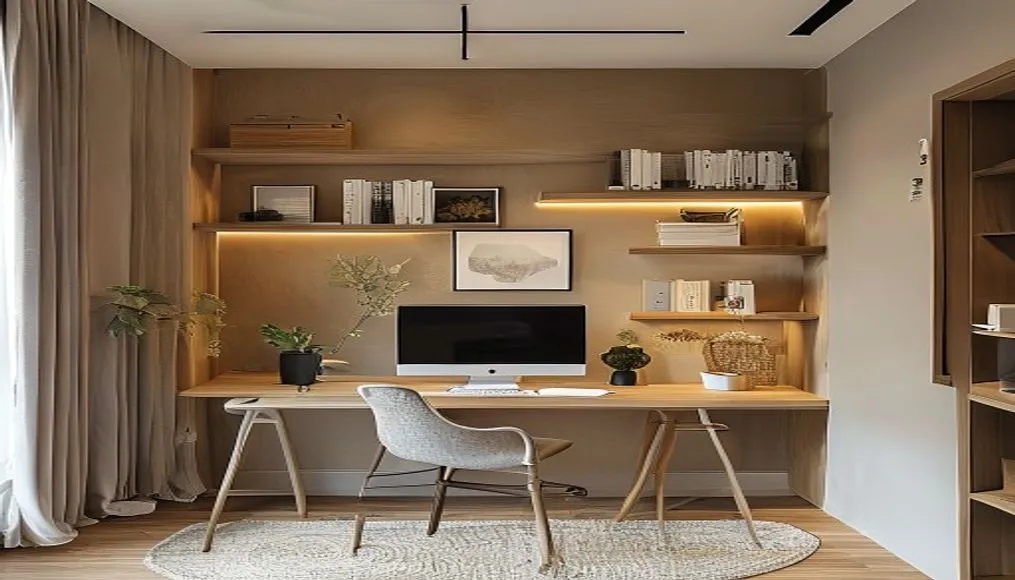
Smart Space Utilization: Vertical Storage and Multi-Functional Furniture
Floor space is tight. So look up. That’s where the real help is. Build up, not out. This gives you more room to store things – and keeps the floor empty. That makes the space feel bigger. The key is to pick storage that fits – not overpowers.
Wall shelves change everything. They pull your eyes upward. That tricks the mind into seeing more room. They also keep what you need close – without piling your desk. One good pick? The IKEA KALLAX series. It starts around $70 (â¹5,700). Its pieces snap together any way you want. Use it for books, files, or small decor. Add baskets to hide clutter – and you get both use and looks.
Want something unique? Try Indian stores like IndiaMART or Pepperfry. They sell teakwood shelves with old-world style – like thin frames with brass lines or carved edges. These mix heritage with now. Theyâre great if you want your desk area to feel like you.
Pegboards and magnetic boards are often missed. Hang one above your desk. Keep pens, scissors, sticky notes, headphones – right there. Easy to grab. You can pin up mood boards – calendars – even family shots. That adds warmth to a plain space. A 2022 study by the Journal of Environmental Psychology says personal spaces can lift engagement by up to 32%. So donât skip a simple board full of things that inspire you.
Furniture with two jobs is a must in tiny offices. Why have a desk that only does one thing? Make it fold into a table – or rise for standing work – or even turn into a bed for guests.
- Wall-mounted fold-down desks work great in studios. When done, they fold flat against the wall. Boom – floor space is free.
- Expandable desks, like those from West Elm, have clean lines. Hidden flaps slide out when you need more room.
- Ottomans with storage inside pull double duty. Sit on them during video calls. Use them to hide cords, notebooks, or supplies.
Designers like Clare Brass, a London-based green interior expert, say this: âIn small spaces, every object must earn its place.â Thatâs a shift. You stop hoarding – start choosing. Pick things that look good and work hard.
That matters.
Not all furniture does.
Pick wisely.
Designing for Well-Being: Color, Light, and Ergonomic Comfort
Your office affects your mood – your energy – your focus. A tight room can feel heavy if not planned well. But with the right colors, light, and body-friendly setup, even 50 sq ft can feel open – and alive.
Color is quiet but strong. White and neutral tones make space feel big. But they can also feel cold. The fix? Warm it up. Use soft pastels or earth tones like sage green, warm beige, or dusty rose. A study in Color Research and Application says green boosts creativity by up to 15%. Blue sharpens focus and clears the mind. Big help.
Light is just as key. Natural light is best. But if your spot has no windows – layer your light:
- Overhead lighting for basic brightness
- Task lighting (like a bendable desk lamp) for reading and typing
- Accent lighting (under-shelf LEDs or small floor lamps) to cut shadows and add feel
Want a warm, soft glow? Try a soft white LED desk lamp with dim control. It cuts eye stress during long hours. It also helps your bodyâs sleep clock stay on track. Harvard Medical Schoolâs sleep team says warm light in the evening helps your body make melatonin. That means better sleep for remote workers.
Ergonomics canât take a back seat. A bad chair or screen height leads to back pain – neck strain – lower output. The OSHA (Occupational Safety and Health Administration) says:
- Feet flat on floor (or on a footrest)
- Elbows at 90 degrees when typing
- Top of screen at or just below eye level
Even in tight rooms, you can do this. Look for slim-profile ergonomic chairs that support your lower back without taking over the room. Brands like Hbada and AmazonBasics sell small designs under $150. Pair with a monitor riser or even stacked books to get your screen to the right height.
Cable clutter is often ignored. Loose wires make the space messy. Theyâre also a trip risk. A cable management kit with clips, sleeves, and a desk hole keeps cords neat and out of sight. Small upgrade – big result. Safety and looks both win.
Worth it.
Big difference.
Just do it.
Small-Office Space-Saving Picks You Canât Afford to Miss
These are affiliate links to Amazon. We may earn a small commission at no extra cost to you. We only suggest products we have actually researched.
- Compact wall-mounted desk
- Vertical shelving unit
- Slim ergonomic office chair
- Cable management kit
- Soft warm desk lamp
- Foldable standing desk converter
- Modular pegboard organizer
Small-office space-saving picks
These are affiliate links to Amazon. We may earn a small commission at no extra cost to you. We only suggest categories we have actually researched.
Frequently Asked Questions
What is the best layout for a small home office?
Best layout uses natural light well and keeps paths clear. Put your desk near a window if you can. Face the room, not a wall – it feels more open. Use floating shelves and wall desks to save floor space. Keep things you use a lot within armâs reach. Less moving around.
That helps.
Simple fix.
How can I make a tiny office feel bigger?
Use mirrors. They bounce light and make depth. Pick furniture with legs – you see floor under it. That adds air. Stick to light, matching colors. Cut clutter with smart storage. Multi-use furniture – like a desk thatâs also a table – cuts the feeling of crowding.
It works.
Try it.
Is it worth investing in ergonomic furniture for a small office?
Yes. Bad posture causes long-term harm. Think chronic back pain – less work speed. Buy a good chair. Get the desk height right. Set the monitor where it should be. Even small ergonomic tools exist. Your body – and your output – will thank you.
No doubt.
Feel better.
Work better.
Concluding Perspective
Building a small home office isnât about squeezing in more stuff. Itâs about making a place that helps your work – your health – your style. As Sarah Susanka, architect and author of The Not So Big House, says: âItâs not the size of the space that matters, but how you use it.â Use vertical storage. Pick multi-use furniture. Add smart design touches. You can make a space that feels big – works well – and feels like you.
Thatâs the goal.
Not just function.
Not just looks.
Both.
Whether you work from home, freelance, or run a startup, your space shapes your results. Start small. Focus on use. Let each choice do a job. Your dream office isnât about square feet. Itâs about how well it fits you.
End of story.