How to Build Muscle and Burn Fat With No-Equipment Home Workouts
Disclaimer: The information provided in this article is for educational and informational purposes only. It is not intended as medical advice. Always consult with a qualified healthcare professional or physician before beginning any new exercise regimen, especially if you have pre-existing health conditions.

Our editorial team covers wellness, productivity, and modern living \u2014 backed by research, shaped by real experience. We believe good advice should read like a conversation, not a textbook.
You don’t need a heavy rack of dumbbells or a high-end gym membership to transform your physique. Whether you’re navigating a cramped studio in New York, a minimalist flat in London, or a high-rise apartment in Mumbai, the most effective piece of fitness equipment you’ll ever own is already with you: your own body. Bodyweight training, often called calisthenics, has seen a massive resurgence because it strips away the excuses of time, cost, and space. It’s an accessible, versatile, and highly effective way to get strong and lean, regardless of your current fitness level. For more details, visit Bodyweight Workout for Beginners (20.
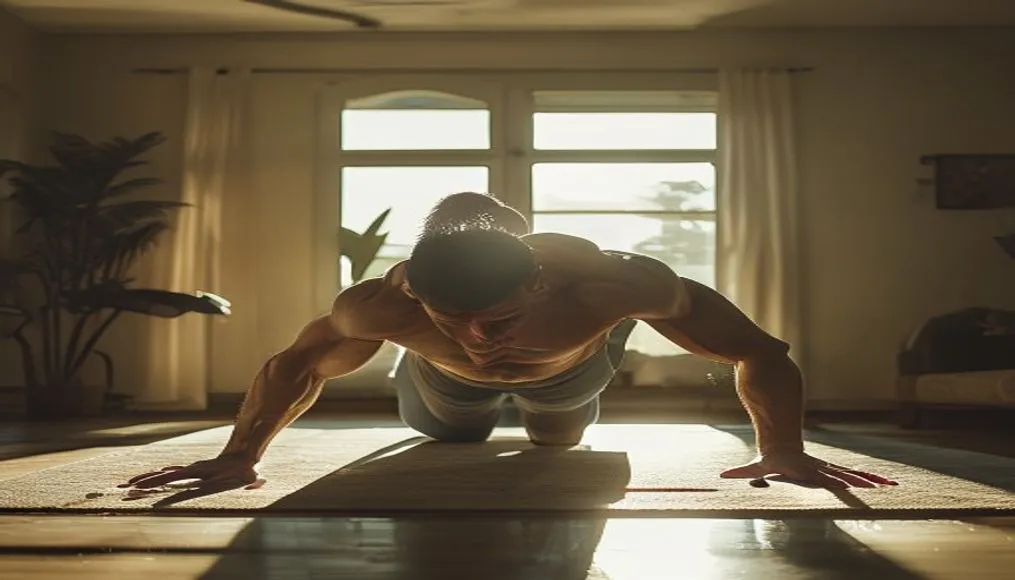
Why Bodyweight Workouts Are the Secret to Longevity and Strength
If you think you can’t get a “real” workout without iron, think again. Bodyweight exercises aren’t just a backup plan for when you can’t get to the gym; they’re a foundational pillar of functional fitness. Dr. Jordan Metzl, a sports medicine physician at the Hospital for Special Surgery in New York, frequently advocates for the efficacy of high-intensity bodyweight movements. He notes that these exercises build “functional strength,” which translates directly to better movement in everyday life, from carrying groceries to climbing stairs.
Movements like push-ups, squats, and lunges are “compound” exercises, meaning they recruit multiple muscle groups and joints simultaneously. This multi-joint engagement doesn’t just build muscle; it also demands more energy, which spikes your heart rate and turns a strength session into a potent calorie-burning event. Furthermore, bodyweight training improves proprioception—your body’s ability to sense its position in space—which is crucial for balance and injury prevention as you age.
- Bodyweight moves are infinitely scalable for beginners and advanced athletes alike.
- They allow for a full range of motion that can be more natural for the joints than fixed-path machines.
- High-intensity interval training (HIIT) using bodyweight moves can burn significant fat in as little as 10 to 15 minutes.
- Digital tools like the Home Workout app provide structured paths for those who need a roadmap without the overhead of a personal trainer.
If you’re just starting your journey and feel overwhelmed, don’t worry. You can explore our guide on the best workout routines for beginners to build a solid foundation before diving into more complex movements.
The Science of Building Muscle Without Lifting Weights
A common myth in the fitness world is that muscle growth (hypertrophy) requires heavy external loads. However, the Journal of Strength and Conditioning Research has published studies showing that muscle growth can be achieved using low loads—like your body weight—provided you perform the exercises to the point of “volitional fatigue.” This means doing enough repetitions that you can’t maintain proper form for another one.
Tony Gentilcore, a Certified Strength and Conditioning Specialist (CSCS) and co-founder of Cressey Sports Performance, explains that muscle growth is driven by mechanical tension, metabolic stress, and muscle damage. You can achieve all three with bodyweight by manipulating “time under tension.” Instead of rushing through 10 fast push-ups, try lowering yourself for five seconds and exploding up. This increases the difficulty without adding a single pound of iron. As reported by 30 Moves to Make the Most of Your At, these developments are significant.
To target every major muscle group, try this balanced circuit that I’ve personally found to be a game-changer for home-based strength:
- Standard or Incline Push-ups: 10–12 reps (focus on chest and triceps).
- Bulgarian Split Squats: 10 reps per leg (elevate your back foot on a chair or sofa to torch the quads and glutes).
- Plank with Shoulder Taps: 30 seconds (stabilizes the core and engages the deltoids).
- Glute Bridges: 15 reps (essential for posterior chain strength and counteracting long hours of sitting).
- Wall Sits: Hold for 30–45 seconds (builds isometric endurance in the lower body).
Repeat this entire circuit four times, resting only 45 seconds between rounds. By the third round, you’ll realize that gravity provides all the resistance you need. For those looking for even more structure, apps like Freeletics use AI to adjust the difficulty of these moves based on your performance, making it feel like a digital coach is right there in the room with you.

High-Intensity Cardio: Burning Fat Without a Treadmill
Many people assume that cardiovascular health requires a treadmill or a five-mile run outside. While those are great, you can achieve similar—or even superior—metabolic benefits through “metabolic conditioning” at home. This approach keeps your heart rate high while building muscular endurance.
When you perform explosive bodyweight movements, you trigger a physiological phenomenon known as Excess Post-exercise Oxygen Consumption (EPOC), often called the “afterburn effect.” This means your body continues to burn calories at an elevated rate for hours after the workout is over. This is particularly useful for busy professionals in high-density cities like Sydney or London who might only have 20 minutes between meetings.
Try this “Heart Rate Hero” HIIT circuit:
- Jumping Jacks: 45 seconds (get the blood flowing).
- Mountain Climbers: 45 seconds (targets the core and shoulders while spiking the HR).
- High Knees: 45 seconds (mimics sprinting in place).
- Burpees: 45 seconds (the ultimate full-body conditioning move).
- Active Recovery: 60 seconds of slow walking or light stretching.
Repeat this cycle five times. This routine doesn’t just melt fat; it builds the stamina needed for life’s daily demands. If you prefer a guided experience, the Home Workout app offers specific cardio-focused tracks that require zero equipment and can be done on a simple yoga mat.
Maximizing Your Progress Through Consistency and Variety
One of the biggest hurdles to home fitness is the “plateau.” When you do the same ten push-ups every day, your body eventually adapts and stops changing. To see continuous results, you must implement “progressive overload.” In a gym, you’d add more weight. At home, you add more reps, decrease your rest time, or try more difficult variations of the same move (like transitioning from regular push-ups to diamond push-ups).
Incorporating different modalities like Pilates or Yoga can also prevent boredom and target “stabilizer” muscles that standard strength training might miss. Pilates, in particular, is excellent for spinal health and core stability, which is vital if you spend your day hunched over a laptop.
A sustainable weekly schedule might look like this:
- Monday: Full-body strength circuit (focus on form and tempo).
- Tuesday: 15-minute HIIT cardio session.
- Wednesday: Active recovery (a long walk or a 10-minute Pilates flow).
- Thursday: Lower body focus (squats, lunges, and bridges).
- Friday: Upper body and core focus.
- Saturday: Fun movement (dance, a hike, or a digital fitness class).
- Sunday: Full rest and mobility stretching.
Consistency is fueled by community. Research has shown that people who share their goals with a group are far more likely to stick with them. You can learn more about how this works in our deep dive on the shocking impact of digital fitness communities on mental health in 2026.
Staying Motivated When Your Living Room Is Your Gym
The hardest part of working out at home isn’t the exercises—it’s starting them. Without the “destination” of a gym, it’s easy to let the sofa win. To combat this, you need to treat your home workout like a non-negotiable appointment.
- Designate a Space: Even if it’s just a specific corner of your bedroom, mentally associate that spot with movement.
- Gamify the Experience: Use apps like Seven or Freeletics to track your streaks and earn badges.
- Curate Your Environment: Create a “workout-only” playlist. Science shows that up-tempo music can reduce the perception of effort and increase endurance.
- Leverage Free Resources: You don’t need to spend a dime. YouTube creators like Fitness Blender or MadFit provide professional-grade coaching that is accessible from Mumbai to Sydney.
I’ve personally found that having a “virtual workout buddy”—someone you text before and after your session—creates the accountability necessary to push through those days when motivation is low. It’s about building a habit, not just waiting for inspiration to strike.
Looking Ahead: Your Body Is the Best Gym You’ll Ever Have
Life is shifting – more time at home, less time commuting. That means fewer chances to hit the gym. But here’s the good part – you don’t need a gym to stay strong. No need for heavy iron or stacked machines. Your body is enough. Use it right and you build real strength.
Bodyweight training teaches you how movement works. It builds balance, control, and power. Machines can’t teach that. They guide your path. Your body lets you find it.
Want muscle? Yes, you can get it. Need to lose fat? That’s possible too. Stressed from work? A quick set of squats or push-ups clears the mind. The fix is under your feet – not on a shelf.
Start small. One push-up. One squat. One plank. Do them every day. Then add more. Reps stack up. Habits form. Results show.
That matters.
Big changes come from tiny steps. You don’t need hours. Just effort. Real effort.
Check these reads to see how fitness is changing worldwide – especially in India:
– Uniting Strength: The Rise of Hybrid Fitness Classes in India
– Bollywood Fitness Influencers: Shaping Indian Workout Habits
Fitness isn’t just global – it’s personal. And it’s moving into homes.
Frequently Asked Questions
Q: Can I really build significant muscle without lifting weights?
A: Yes. Slow reps help. So does less rest between sets. Try hard moves like one-legged squats. Your muscles grow when pushed. No weights needed – just tension.
It works.
Q: How long should a home bodyweight session last?
A: Better to go 20 to 30 minutes and stay sharp. A full hour of lazy moves beats nothing. But focus wins. HIIT? That can take just 15 minutes.
That’s enough.
Short bursts, full effort. Body responds fast.
Q: What if I have joint pain during bodyweight moves?
A: Form comes first. Always. If push-ups hurt wrists, use knuckles or handles. Squats bothering knees? Check your stance. Maybe go lower later – when you’re stronger.
Pain follows bad form.
Fix the base. Then add reps.
Q: Is it okay to work out every day?
A: Muscles need rest. They grow when healing. Hit 3 to 5 hard sessions per week. Take two days off. Or move slow – walk, stretch, breathe.
Recovery counts.
Rest is part of the job. Not a break from it.